Welcome Future Drivers: Your Official Hub for Proven Road Test Tips
Hello future drivers across Surrey, Langley, and beyond!
Stepping behind the wheel to earn your licence is a huge milestone, but we know how easy it is to feel overwhelmed by test day nerves, conflicting advice from friends, and confusing traffic rules. That is why we are launching this dedicated blog space: to give you a single, reliable destination packed with clear, actionable road test tips designed to keep you 100% safe on the road.
At Pro1 Driving School, we believe earning your licence should never come down to luck or stressful trial and error. Here is who we are, what makes our approach different, and what you can expect as you follow along with our upcoming guides.
Who We Are: 15+ Years of Lower Mainland Commercial Experience
When you are preparing for your licence exam, casual advice is rarely enough. Every instructor on the Pro1 team brings over 15 years of commercial driving experience navigating Lower Mainland roads.
From the dense multi-lane corridors of Surrey to the highway merges and industrial routes of Langley, Port Coquitlam, and Maple Ridge, our team knows local traffic patterns and hazards inside and out. We translate more than a decade and a half of heavy road experience into practical, simple techniques any beginner can master.
Coaching Designed for Nervous Drivers
Many students struggle on exam day not because they do not know how to steer, but because anxiety takes over. We take a fundamentally different approach.
Our Chief Instructor, Mubashar, comes from an educational background with deep training in human behaviour. We understand exactly how stress impacts focus, decision-making, and vehicle control. Rather than using rigid lectures or high-pressure instruction, we break driving down into clean, detail-oriented steps that eliminate fear of the unknown.
Here is what that patient, structured approach looks like in real life:
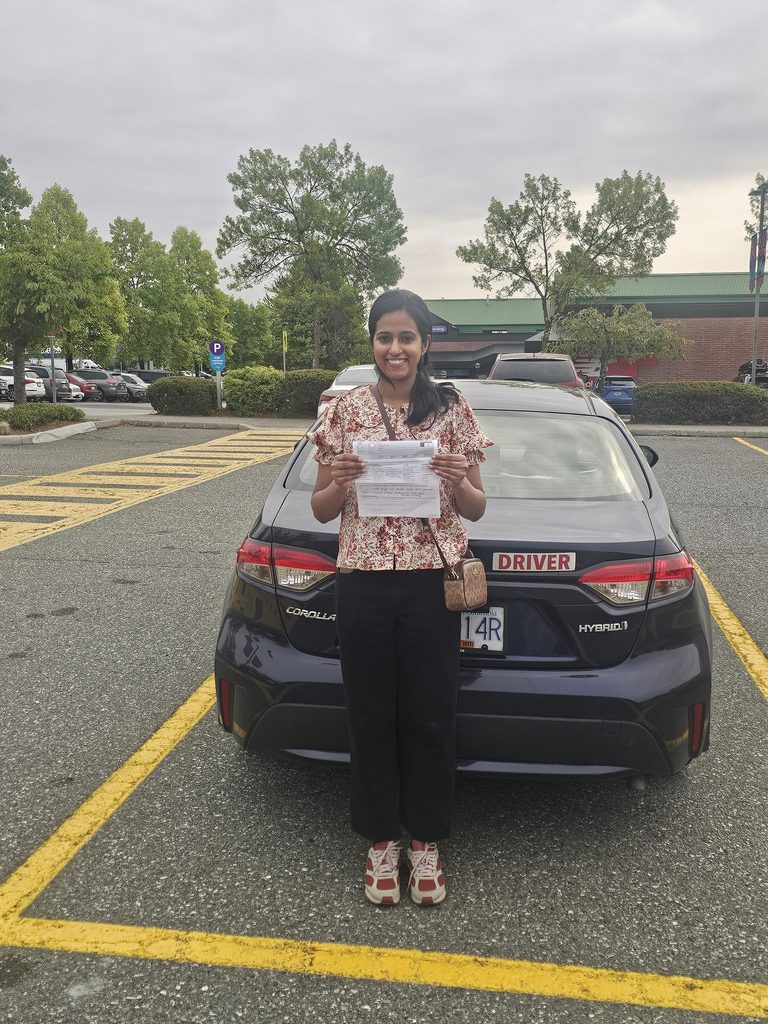
“Today I passed my road test, and I’m so grateful to have had Mubashar from Pro1 Driving School as my instructor! 😊
Before learning with him, I had lessons with other instructors and unfortunately failed my test. Mubashar is honestly the best instructor I’ve ever had. He is extremely patient, knowledgeable, supportive, and always on time. He never shouts or makes you feel nervous—instead, he builds your confidence and explains everything very clearly.
What I appreciated most is that he didn’t just prepare me to pass the road test; he taught me how to drive safely and confidently on my own in the future.
He was also very flexible and scheduled lessons according to my convenience, which made everything much easier. I highly recommend Pro One Driving School and Mubashar to anyone learning to drive or preparing for their road test.”
— Kavitha Joshi(Verified Google Review)
What to Expect in Our Upcoming Blogs
Consider this page your personal road test study guide. We are rolling out an ongoing series of location-specific articles packed with tailored road test tips, including:
Surrey Test Locations (Newton & Guildford): How to manage rapid school-zone speed drops, heavy transit corridors, and high-pedestrian shopping areas.
Langley Neighbourhood: Navigating the busy Willowbrook area, railway crossings, and rural-to-urban bypass merges.
Port Coquitlam (PoCo) & Maple Ridge: Mastering multi-lane roundabouts, highway approaches, and steep residential hill parking.
Step-by-Step Maneuver Breakdowns: Clear formulas for parallel parking, stall parking, and two-point turns without second-guessing.
Keep Coming Back and Stay Ahead
Safe driving habits stay with you for life. Make sure to bookmark this page and check back regularly as we publish our next wave of location-focused road test tips.
If you are ready to build genuine road confidence with one-on-one professional guidance, explore our Road Test Preparation Services
and book your lesson with Pro1 Driving School today.
From 10 Hours of Frustration Elsewhere to Cruising at 50 km/h: A Real Lesson Breakthrough
Driving anxiety is rarely about coordination or intelligence; it is almost always about feeling rushed before you are ready. Many learners across White Rock and Surrey come to us feeling defeated after taking lessons with instructors who pushed them too far, too fast.
A student who came back for her second lesson this week illustrates how a patient approach transforms hesitation into genuine control.
The Background: 10 Hours of Lessons, Yet Still Terrified
Before joining Pro1 Driving School, this student had already completed 10 hours with another driving school. Despite that significant investment of time and money, her confidence was completely shattered.
When she sat behind the wheel for her very first session with us, her anxiety was so severe that she refused to touch a live roadway. Instead of pressuring her, we listened. We guided her gently into a calm residential area to rebuild her comfort from the ground up:
Allowing her to set the pace without any raised voices or criticism.
Letting her test the dual-brake backup so she knew she was 100% safe.
Focusing on simple steering and low-speed vehicle feel until her nervous system relaxed.
Lesson Two: Overcoming the 25 km/h Fear Barrier
After taking a one-week break, she returned for her second lesson. That week away meant the anxiety had crept back in. On the drive out toward our practice zone, even 25 km/h felt blindingly fast to her. The fear was acute enough that our instructor took temporary control through the dual-brake system to keep her safe while her breathing settled.
Rather than turning back, we deconstructed the speed anxiety right there in the car:
Separating Speed from Threat: We broke down eye-movement habits, teaching her to look far ahead rather than staring at the asphalt rushing beneath the hood.
Micro-Progressions: We navigated quiet, narrow two-way residential streets first, letting her get used to oncoming traffic in tight spaces where lower speeds felt natural.
Building Independent Control: As her hand-over-hand steering smoothed out, her muscle tension dissolved.
The Result: Confident on the Main Road at 50 km/h
By the end of that single 1.5-hour session, the breakthrough was complete.
She navigated tight, narrow two-way neighborhood streets with oncoming traffic, transitioned onto wide suburban thoroughfares, and drove all the way back on the main road cruising smoothly at the full 50 km/h speed limit—calm, focused, and entirely in control of her vehicle.
Ten hours at a high-pressure school could not give her what two patient, structured sessions did: the real belief that she can drive safely. If driving anxiety is holding you back from earning your Class 7 or Class 5 licence, the right coaching environment makes all the difference. then passing the road test is just simple doable task.
Booking your ICBC road test is a massive milestone. Whether you are aiming for your Class 7 novice licence or stepping up to your full Class 5 in Surrey or Langley, the days leading up to your exam dictate your success behind the wheel.
Most road test failures do not happen because a learner forgets how to steer. They happen because of poor habits, fatigue, and mental overwhelm in the 48 hours before testing begins. ICBC examiners are trained observers; they assess not only your technical compliance with the Motor Vehicle Act, but also whether you project calm, safe control of the vehicle.
To give yourself the absolute best chance of passing on your first attempt, here are the critical preparation mistakes you must avoid before test day.
1. Slacking Off on Training in the Final Weeks
A frequent mistake students make is easing off their practice once their test date is confirmed. Driving is built on physical muscle memory and rapid hazard perception. If you pause your driving lessons or stop practising two weeks before your appointment, your reflexes dull, your visual scanning tightens up, and your shoulder checks become inconsistent.
Stay Consistent: Keep a steady training cadence right up until the week of your road test.
Book a Pre-Test Warm-Up: Schedule a 45-minute refresher lesson with your instructor right before your ICBC check-in. Warming up your hands, feet, and eyes ensures you enter the examiner’s car completely dialled in.
2. Sacrificing Sleep the Night Before (Get at Least 8 Hours)
Staying awake late cramming road signs, scrolling on your phone, or tossing and turning over “what-if” scenarios will ruin your performance. Driving demands split-second decision-making, speed regulation, and continuous 360-degree scanning.
Depriving your brain of rest directly reduces reaction time and increases panic when unexpected road hazards pop up.
Protect your schedule: shut off screens early and get at least 8 hours of quality sleep before test day. Showing up well-rested keeps your nervous system steady when navigating complex multi-lane intersections.
3. Consuming Alcohol or Clouding Your Mind
This should go without saying, but arriving with a foggy head, a lingering hangover, or residual fatigue from socialising the night before guarantees a failed test.
Your mind must be sharp, alert, and entirely clear. Alcohol, recreational substances, and even heavy, sluggish meals right before your test impair coordination, slow peripheral awareness, and induce brain fog. Treat your road test with the same discipline as an athletic event: drink plenty of water, eat a clean, balanced meal, and bring a clear mind behind the wheel.
4. Showing Up Without the Required Documents or Vehicle Checks
Few things spike pre-test anxiety faster than arriving at an ICBC driver licensing office unprepared. Scrambling for paperwork in the waiting room rattles your focus before you even meet your examiner.
Make sure you have organised:
Primary and Secondary ID: Your current licence/learner permit and accepted secondary identification.
Payment Fees: ICBC road test and licensing fees.
Vehicle Roadworthiness: If you are using your personal car instead of a dual-control instructor car, ensure all brake lights, turn signals, windshield wipers, and horn work flawlessly, with clean windows and valid insurance decals.
(Using an insured, dual-control driving school car eliminates vehicle inspection risks entirely.)
5. Projecting a Lack of Confidence to the Examiner
Your examiner is not looking for robotic perfection; they are evaluating whether you are a safe, predictable driver whom they can trust sharing public roads with their own families.
Hesitation, second-guessing simple manoeuvres, and visible panic communicate to the examiner that you do not trust your own judgment:
Banish Hesitation at Stops: Make crisp, complete stops behind the white stop line. Don’t roll or jerk nervously.
Own Your Space: Avoid creeping excessively below the posted speed limit out of fear. Cruising at 25 km/h in a wide 50 km/h zone signals a lack of vehicle control. Maintain a smooth, steady, legal pace.
Maintain Your Posture: Keep both hands relaxed on the wheel, breathe deeply from your diaphragm, and perform deliberate, visible shoulder checks.
If you make a minor non-dangerous error (like bumping a curb gently during a parallel park), do not give up or verbalise panic. Take a breath, reset your car, and continue driving with authority.
Build Unshakeable Road Test Confidence with Pro1 Driving School
The best antidote to test-day anxiety is structured preparation. At Pro1 Driving School, our ICBC-certified instructors conduct comprehensive mock road tests across genuine Surrey, Newton, and Langley ICBC routes. We identify weak spots early, eliminate bad habits, and teach you how to remain calm under pressure.
How to Pass Your ICBC Maple Ridge Road Test: 6 Tricky Intersections to Master
Taking your ICBC road test in Maple Ridge brings a distinct set of challenges. Unlike flatter, predictable grid layouts, testing out of the Maple Ridge Service BC Centre (on Dewdney Trunk Road) means managing rolling hillside grades, busy multi-lane corridors, rapid school zone transitions, and tricky rural-to-urban road connections.
Whether you are preparing for your Class 7 Novice licence or stepping up to a Class 5, knowing where other learners fail is the key to passing on your first try. Here is our breakdown of 6 difficult intersections you will likely face during your Maple Ridge road test and how to handle them safely.
6 Difficult Intersections in Maple Ridge (And How to Handle Them)
1. Dewdney Trunk Road & 224th Street (Downtown Core)This busy multi-lane intersection features heavy pedestrian foot traffic, buses pulling in and out, and congested left-turn lanes.
The Trap: Rushing an unprotected left turn or failing to spot pedestrians stepping off the curb while turning right on a green light.
The Fix: Keep your wheels straight while waiting to turn left in the intersection, scan crosswalks thoroughly in both directions, and shoulder check your right blind spot for cyclists before making right turns.
2. Lougheed Highway (Hwy 7) & Haney BypassA high-speed, multi-lane intersection where traffic moves fast and lanes shift quickly.
The Trap: Hesitating when merging or misjudging high-speed traffic gaps when turning onto or off the bypass.
The Fix: Do not stare at the front bumper; scan well ahead to match traffic speed smoothly. Make lane changes early, signal clearly, and shoulder check before entering any deceleration or turning lanes.
3. Dewdney Trunk Road & 228th StreetA major thoroughfare junction right near common testing routes, leading directly into residential and playground areas.
The Trap: Crossing solid white lines when slipping into dedicated turning bays, or carrying 50 km/h momentum directly into sudden 30 km/h park and school speed reductions nearby.
The Fix: Wait until the white dividing line becomes dashed before moving into the turn lane, and check your speedometer immediately after completing the turn.
4. Abernethy Way & 232nd StreetA wide, fast-moving intersection connecting commercial bypass traffic with residential collector routes.
The Trap: Entering the intersection on a stale green light without covering the brake, or making wide right turns that swing into the incorrect lane.
The Fix: Establish a clear “point of no return.” If the light turns amber before you hit that point, make a smooth, controlled stop rather than gunning the engine.
5. 222nd Street & 122nd / 123rd Avenue (Residential Hill Intersections)These hillside residential crossings feature visual blind spots caused by parked vehicles, roadside vegetation, and grade elevation changes.
The Trap: Rolling through two-way stop signs or failing to perform a safe two-stage stop when sightlines are blocked.
The Fix: Stop completely behind the stop line or pedestrian line first. Once safe, creep forward slowly into your creep zone to check cross-traffic before proceeding.
6. Lougheed Highway & 222nd StreetA split-grade, high-volume intersection where hill momentum easily leads to speeding infractions.
The Trap: Letting gravity pull your car over the posted limit while heading downhill toward the intersection, or drifting over lane dividers on wide turns.
The Fix: Use light, progressive braking down the hill to hold your speed steady at or just below the speed limit, and finish every turn precisely in the nearest legal travel lane.
Crucial Habits That Examiners Watch For
Hill Parking: Maple Ridge has substantial grade changes. Know your wheel directions by heart (wheels to the left for uphill with a curb; wheels to the right for everything else) and always set your parking brake.
Shoulder Checks: Perform a 90-degree chin-to-shoulder glance on every turn, lane change, and right-turn merge to protect cyclists and pedestrians.
Complete Stops: Coming to a 0 km/h stop behind the white line is non-negotiable. Rolling stops are an automatic failure.
Is Your Road Test Booked for Maple Ridge?
Do not leave your licence to chance or let unexpected intersection quirks catch you off guard. At Pro1 Driving School, our patient instructors take you through the exact routes and challenging intersections used by Maple Ridge examiners so there are zero surprises on test day.
[Contact Pro1 Driving School today] to book your Maple Ridge mock road test and pre-test warm-up lesson, and pass with complete confidence.
Why Some Pass the ICBC Road Test on the First Try While Others Struggle Repeatedly
Failing an ICBC road test rarely comes down to bad luck. Every week at testing centres across Surrey and Langley, examiners see two distinct types of students: those who drive with smooth, calm predictability and pass on attempt number one, and those who return three, four, or five times, wondering what keeps going wrong.
The difference almost never comes down to raw talent. Instead, first-time passers approach test preparation with completely different habits than repeat test-takers.
—
## 1. Practice Built on “The Why,” Not Just Rote Rules
Struggling drivers focus on memorizing mechanical actions: *”Check this mirror now, turn the wheel this much here.”* When an unexpected situation arises—such as construction near 88th Avenue or a cyclist merging unexpectedly in Langley—panic sets in because there is no memorized script for that moment.
First-time passers understand the underlying reasoning. When an instructor explains *why* a 360-degree scan prevents a collision or *why* lane position shifts around parked delivery vans, the student develops road perception. They don’t just mimic driving; they make independent, defensive decisions that examiners immediately recognize.
—
## 2. Full Route Conditioning vs. Casual Neighbourhood Driving
Many candidates log plenty of practice hours, but all of it occurs along quiet residential roads or running familiar errands with parents. They avoid tricky multi-lane left turns, highway merges, school zones with obstructed signs, and tight reverse stall parking until test day.
Students who pass on their first attempt simulate exam conditions weeks ahead of time:
* They master speed management down steep hills without creeping past 50 km/h. * They identify subtle 30 km/h playground and school zone boundaries automatically. * They practice in rain, heavy traffic, and poor lighting so test-day weather never rattles their composure.
—
## 3. Eliminating “Automatic Faults” Early
Most repeat failures do not stem from bad steering; they result from simple, uncorrected habits that accumulate points or trigger instant disqualifications:
* **Incomplete Stop Line Checks:** Rolling past the stop line before completing a secondary creep for visibility. * **Lazy Shoulder Checks:** Moving the eyes instead of turning the head a full 90 degrees before changing lanes, turning, or pulling away from a curb. * **Speed Inconsistency:** Fluctuating erratically between 40 km/h and 55 km/h in standard zones.
First-time passers drill these fundamental mechanics until they become involuntary reflexes rather than conscious chores.
—
## 4. Calm Nervous System vs. Panic Loops
Driving anxiety is one of the biggest causes of test-day failure. Anxious students overthink simple commands, grip the wheel tightly, and miss basic road signs because their stress blocks situational awareness.
Confidence is not an accident—it comes from training in an environment free of yelling and tension. When students practice with patient, constructive feedback, their nervous system learns that mistakes are simply adjustment points. On test day, they view the examiner as another passenger rather than an adversary.
—
## The Path to a First-Try Pass
Passing on your first try is not about being a perfect driver; it is about demonstrating that you are safe, observant, and predictable behind the wheel. Replacing casual habits with structured, calm guidance turns the ICBC road test from an intimidating hurdle into a straightforward formality.
## Overcoming Road Anxiety: Why Nervous Drivers Struggle (And How They Pass)
For many students, the obstacle on test day isn’t mechanical skill—it is overwhelming anxiety. When nervousness takes over, tunnel vision sets in: you grip the steering wheel with white knuckles, your foot jerks between the brake and accelerator, and your brain misses obvious signs or speed changes.
Struggling test-takers often practice in environments that feed this panic:
* **The High-Stress Cockpit:** Learning alongside a family member or strict instructor who yells, gasps, or grabs the wheel whenever a small error occurs. This conditions your brain to associate the driver’s seat with constant tension. * **The “Mistake Spiral”:** During the test, making a minor, non-critical deduction (like brushing a curb or hesitating slightly at a yield sign) causes total panic, leading to an automatic failure five minutes later because the mind is still stuck on the first mistake.
### How First-Time Passers Beat Exam Nerves
Students who succeed despite serious anxiety take a structured approach to desensitizing their fear:
* **Low-Arousal, Calm Coaching:** They train in an atmosphere with zero shouting and zero pressure. When an instructor remains completely grounded and explains corrections rationally, your heart rate stays steady, allowing your muscle memory to take over. * **Segmented Exposure:** Instead of jumping straight into busy Surrey intersections or chaotic highway merges, skills are built progressively. You master quiet residential roads, then move to two-lane routes, and finally tackle heavy traffic only when you are mentally ready. * **The “Reset” Technique:** An ICBC road test is not a test of perfection; it is an evaluation of overall safety. Confident students learn to take a slow, deep breath at red lights, mentally leave minor errors behind, and focus strictly on the immediate five seconds ahead of them.
Once you replace fear with clear, step-by-step predictability, the examiner’s seat stops feeling like a courtroom—and driving becomes an intuitive, calm routine.
## The Secret Weapon: A Realistic Mock Road Test
Reading the handbook and driving around your neighbourhood will only take you so far. The single most common trait shared by our students who pass on their very first try is taking a full **ICBC Mock Road Test** beforehand.
When you train specifically around the **Surrey (King George / 152nd St)** and **Langley (56th Ave / Production Way)** testing centres, you eliminate the fear of the unknown. A proper mock test covers:
* **Authentic Examiner Scoring:** Experiencing the exact scoring sheet, marking criteria, and commands ICBC examiners use. * **Local Hazard Hotspots:** Navigating tricky multi-lane left turns, sudden speed drops near school zones, and complex railway crossings specific to Surrey and Langley routes. * **Precision Parking Under Pressure:** Mastering two-point turns, hill parking, and reverse stall parking until they are second nature. * **Pinpointing Blind Spots:** Catching lingering habits—like rolling stops or incomplete shoulder checks—while there is still time to correct them.
—
### Step Into Your Exam With Complete Confidence
Passing the first time saves you months of waiting for retest slots, re-booking fees, and unnecessary test anxiety.
Whether you need a full package from scratch or a targeted mock exam brush-up before test day, **Pro1 Driving School** offers calm, patient, and respectful coaching across Surrey, Langley, and surrounding areas.
* **Call or WhatsApp:** 778-266-6000 * **Pick-Up & Drop-Off:** Available directly from home or school * **Book Your Session:** Visit [pro1drivingschool.ca](https://pro1drivingschool.ca?
Here is the updated blog post rewritten from your personal, human perspective as a driving instructor, using plain everyday language and Canadian English spelling (such as licence, practice, and favour):
Why Standard Driving Schools Fail Nervous, Anxious, and Neurodivergent Learners
When someone sits behind the wheel for the first time, it is completely normal to feel a bit nervous. But for anxious adults, nervous beginners, or neurodivergent students—like those with ADHD —that nervous feeling can quickly turn into total overload.
When people look for a driving school, they usually assume that all instructors teach the exact same way. But after years of coaching, I can tell you that generic, old-school teaching methods often cause more harm than good for learners who process information differently.
Here is why standard driving lessons so often fail—and what nervous and neurodivergent drivers actually need to succeed.
1. Just Telling You What You Did Wrong vs. Finding the Root Cause
Most driving instructors rely on pure repetition. They drive you around the same few blocks over and over again and point out every mistake as it happens: “You touched the curb again” or “You’re too close to that line.”
If you are an anxious or neurodivergent learner, hearing that just makes you feel frustrated and defensive. Knowing that you made a mistake does not help you understand why it happened in the first place.
What I Do Differently:
I look for the root cause behind the mistake. For example:
Did you hit the curb because your visual reference points were unclear?
Did parallel parking go wrong because your starting position was off?
Did you rush through an intersection because you felt rushed by the driver tailgating you?
When we uncover the underlying reason for an error together, you get clear answers instead of frustrating criticism.
2. Too Much Talking and Information Overload
Drivers with ADHD or high anxiety process information differently, especially under pressure. When traffic is moving fast and an instructor starts barking out continuous instructions (“Check your mirror, shoulder check, signal, watch that car, turn now!”), it overloads your brain. You freeze up, panic, or get overwhelmed.
What I Do Differently:
I adjust my teaching to match how your brain naturally learns best:
For Visual Learners: We pull over and use a quick whiteboard drawing to map out tricky intersections or parking steps before you ever attempt them.
For Logical Learners: We talk through the logic step-by-step (“Which tire hits the curb first if you turn the wheel this way?”) so you build a solid mental picture.
One Step at a Time: We break down complex skills into small, simple steps so you never feel overwhelmed.
3. High Stress vs. A Safe Environment
Anxiety puts your brain right into fight-or-flight mode. If an instructor sighs, acts impatient, or raises their voice, your brain completely stops taking in new information.
Many of my adult and neurodivergent students come to me carrying heavy stress from past failed road tests, impatient family members, or rude instructors. Repeating those bad experiences in a training car only makes driving anxiety worse.
What I Do Differently:
I keep my car completely calm, zero-shouting, and zero-judgment. Mistakes are not failures—they are just helpful feedback. When you know it is safe to make a mistake without getting yelled at, your heart rate goes down and real learning happens.
4. No More Family Guesswork: Post-Lesson Written Reports
With most driving schools, the second the car stops, the lesson is over. The instructor takes your money, drives away, and parents or partners are left asking, “How did it go?” You usually give a one-word answer like “Fine,” which leaves your family completely in the dark. Then, when they try to help you practice on weekends, it turns into arguments because nobody is on the same page.
What I Do Differently:
I send a detailed written progress report after every single lesson. This report goes to both you and your family so everyone knows exactly what is going on:
Clear Progress: You can see what skills you mastered during the session.
Targeted Practice Tips: Your parents or partner know exactly what to help you practice during home hours without any guessing.
Stress-Free Teamwork: Instead of arguing in the car, family practice becomes calm and supportive.
5. A Custom Plan for Every Student
Standard driving schools treat every student like a box to check off an assembly line. They expect everyone to learn at the exact same speed using the exact same checklist.
What I Do Differently:
Everyone learns differently. Whether you are 17 or 55, dealing with anxiety, or living with ADHD, I customize my coaching around your unique strengths, speed, and goals. My aim is not just to help you memorize a few routes to pass a test—it is to give you deep, permanent confidence so you feel safe driving anywhere.
The Pro1 Difference
At Pro1 Driving School, I have rebuilt driving instruction from the ground up. By focusing on diagnostic, stress-free coaching and clear communication, my students get the support, empathy, and clear guidance they need to earn their driver’s licence with total confidence.
Driving isn’t just about steering a wheel—it’s about how your mind interacts with the road. Having an instructor who truly understands how your brain works makes all the difference and make you capable to pass road test more easily.